Lucas Versantvoort / February 20,
2015
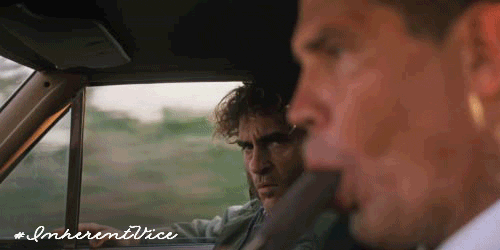 Oh, Inherent Vice, I really
wanted to like you. I’ll preface this review by saying I haven’t read the
Pynchon novel, so don’t go expecting any kind of comparisons. But yeah, when I
saw the trailers and posters, my expectations soared. Finally, after the
ambiguous The Master, PTA would
surprise everyone with a trippy, Big
Lebowski-esque parody of the detective genre. (You may recall that Iñárritu
did something similar. After the crushingly serious Biutiful, he ensured Birdman
didn’t suffer from the same soul-crushing melodrama.) Anyway, although Inherent Vice is an occasionally fun
film, I can’t help but feel something’s missing.
Oh, Inherent Vice, I really
wanted to like you. I’ll preface this review by saying I haven’t read the
Pynchon novel, so don’t go expecting any kind of comparisons. But yeah, when I
saw the trailers and posters, my expectations soared. Finally, after the
ambiguous The Master, PTA would
surprise everyone with a trippy, Big
Lebowski-esque parody of the detective genre. (You may recall that Iñárritu
did something similar. After the crushingly serious Biutiful, he ensured Birdman
didn’t suffer from the same soul-crushing melodrama.) Anyway, although Inherent Vice is an occasionally fun
film, I can’t help but feel something’s missing.
The
central narrative is all about a mystery, or so it might seem. Armed with a
limitless supply of weed, Doc Sportello is told by his ex to look into
something. She fears her current lover, real estate magnate Mickey Wolfmann,
might be kidnapped soon by his wife and her lover and put in the looney bin. Doc
agrees and starts looking into it and that’s all I can say, not because I would
be treading into spoilerish territory, but because that’s all I can remember in
terms of plot! Doc jumps from one conspiracy into the next, stumbling upon
endless strange characters and before you know it, you don’t what the fuck is
going on anymore…and that’s of course precisely the point. In this sense, the
film very much reminds me of The Big
Lebowski. What do you remember most? The mystery or all the weird shit
along the way? Nobody’s still talking about the kidnapped millionaire’s wife,
but the Dude’s language, John Goodman’s fanatical behavior, the Dude writing a
check for a milk carton, the way seemingly unimportant characters and events
suddenly become crucial, etc. Inherent
Vice is the same. You learn to leave the plot alone and enjoy the hippy
humor and oddball characters, like agent Bigfoot telling the owner of a
Japanese restaurant that he wants ‘motto panakeku.’ The scene itself features
Doc and Bigfoot discussing the central mystery, but do you remember any of
that? No, we all just quote motto panakeku.
This is the
film’s central strength: the Lebowski-esque,
acid-trip humor à la the seventies. The film looks and feels authentic in this
regard too: from the language, clothes to the cinematography, everything fits.
But I think I wanted more humor, frankly speaking. I appreciate the subtle
humor and I laughed here and there, but in what definitely feels like one
long-ass film purposefully designed to mind-fuck you, I’d have appreciated more
‘out there’ humor. It also doesn’t help that you never come close to giving
even a remote shit about any of these characters. As a film buff, I definitely
like the idea of screwing with those viewers who’re obsessed with completely
figuring out plots, etc. but for me, I simply needed more comedy. It’s too
subtle for its own good. It’s obvious Inherent
Vice was made by a very talented director: see for instance the multiple
visual references to the concept of Inherent
Vice. Maybe my immediate suspicion that I would be seeing Big Lebowski 2.0 was wrong and maybe
it’s all a hidden message about the cultural downfall of America or something.
PTA is one of those directors who has such a firm grasp of cinema that it’s
doubtful he could ever make a truly bad film, though it could also mean you’re
too devoted a fan… Either way, I haven’t unlocked Inherent Vice’s secrets and though I want to, I’m not too inclined
to go through the ordeal of watching it again which is something reserved for
only the most devoted of PTA’s fans. The rest of us would consider Inherent Vice to be a bad trip.
Dutch version
Oh, Inherent Vice, je filmposters en je trailer zorgden voor zulke hoge
verwachtingen…. Eindelijk, na zijn vorige film, het ambigue The Master, zou regisseur P.T. Anderson iedereen
weer verrassen met een LSD-trip, een Big
Lebowski-achtige parodie op het detective genre. (Iñárritu deed iets
soortgelijks, na het über-serieuze Biutiful
kwam hij tot het wijze besluit om Birdman
te voorzien van veel humor.) Hoewel Inherent
Vice uiteindelijk aan deze verwachtingen voldoet, ontbreekt er toch iets.
Het
centrale verhaal draait om een mysterie. Gewapend met een oneindige voorraad
wiet, krijgt detective Doc Sportello de opdracht van z’n ex om een mysterie op
te lossen. Haar huidige minnaar is een vastgoedontwikkelaar genaamd Mickey
Wolfmann en ze vermoedt dat zijn vrouw en haar ‘vriendje’ samenzweren om hem in
het gekkenhuis te stoppen. Doc gaat akkoord en gaat op onderzoek uit en meer dan
dat valt er eigenlijk niet te zeggen over het verhaal. Niet omdat er anders
teveel zou worden verklapt.....
Juist het
tegenovergestelde: meer is er niet echt te vertellen. Detective Doc vliegt van
complot naar complot, van willekeurig personage nummer 1 naar willekeurig
personage nummer 2 en je raakt snel in de war…en dat is ook de bedoeling. In
dit opzicht doet de film erg aan The Big
Lebowski denken. Wat herinner je je van die film? De ontvoering of alle
bizarre personages en gebeurtenissen die je onderweg meemaakt? Niemand praat
anno nu nog over de ontvoerde vriendin van de miljonair, maar wel over het taalgebruik
van The Dude, John Goodman’s fanatieke gedrag, hoe The Dude een cheque
uitschrijft voor een pak melk, hoe kleine personages of opmerkingen ineens
belangrijker blijken dan je dacht. Voor Inherent
Vice geldt hetzelfde: je leert het mysterie los te laten en gewoon te
genieten van alle subtiele hippie-humor en vreemde personages. Neem de scène
waarin Doc en agent Bigfoot praten in wat eruit ziet als een Japans restaurant.
Wat herinner je je van die scène? Hun discussies over de zaak? Nee, natuurlijk
niet. Je herinnert je Bigfoot die in belabberd Japans de kok vraagt om meer
pannenkoeken: “Motto Panakeku”.
Dit is de kracht
van de film: de Lebowski-achtige
LSD-humor in de context van de jaren zeventig. De film klinkt en ziet er ook
behoorlijk authentiek uit in dit opzicht: taalgebruik, kleding, cinematografie,
alles klopt. Maar eerlijk gezegd had er meer humor in moeten zitten. Oké, de
film bevat subtiele humor en bizarre situaties, maar wanneer een film zo’n
tweeënhalf uur bezig is met een mysterie wiens enige functie is om je te
verwarren, dan had er extra humor in gemogen ter compensatie. Het helpt ook
niet dat je nooit echt in de hoofden van de personages kruipt, je blijft qua
emotie altijd op afstand. Grappig om de kijkers in de maling te nemen die
geobsedeerd zijn met het raden van de dader, maar er had gewoonweg meer bizarre
humor in gemoeten. Dat de film gemaakt is door een zeer begaafd regisseur is
duidelijk, vooral door zijn visuele verwijzingen naar het concept ‘inherent
vice’. Misschien is het verlangen naar meer humor en een variant op The Big Lebowski onterecht. Wie weet
gaat de film over iets heel anders, over bepaalde facetten van de culturele
ondergang van Amerika bijvoorbeeld. Anderson is een regisseur die zulke
indrukwekkende films heeft gemaakt en zo’n grip heeft op de filmgeschiedenis,
dat het maar de vraag is of hij eigenlijk wel een ‘slechte’ film kan maken. Zo’n
aura heeft hij. Dit voedt het idee dat al zijn films geweldig zijn als je maar
goed genoeg oplet. Maar dat kan ook een teken zijn dat je met een iets te
toegewijde fan te maken hebt. Hoe dan ook, om het geheim van Inherent Vice te ontdekken, dat zal ongetwijfeld
meerdere kijkpogingen vereisen. Maar misschien zijn alleen de meest toegewijde Anderson
fans daartoe bereid, opnieuw tweeënhalf uur verveling. Inherent Vice valt tegen, ondanks de reputatie van Anderson. Zeker
geen slechte film, maar je kan moeilijk het gevoel loslaten dat er meer in zat.

